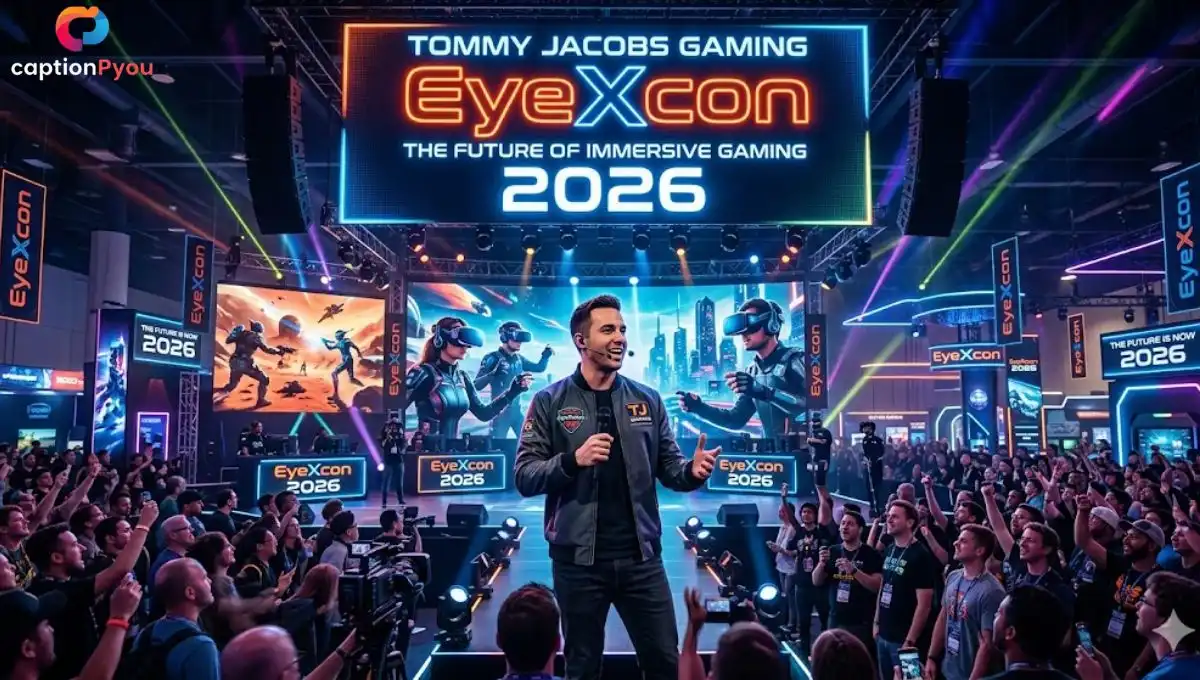
Tommy Jacobs Gaming EyeXcon is appearing across 2026 search results as a next-gen concept tied to eye-led interaction, smarter input, and a more cinematic style of play. What is notable, though, is that public information appears to come mostly from secondary blog coverage rather than a clear official product site or manufacturer page.
The smartest way to evaluate EyeXcon today is to separate the EyeXcon narrative from the real eye-tracking gaming technology already shaping modern play through companies like Tobii and Eyeware.
That matters for buyers. The broader market for immersive gaming hardware is real, active, and improving fast. Tobii’s gaming stack supports hundreds of games, while Eyeware’s Beam software uses webcams or phones for gaze and head tracking in compatible PC setups. In other words, even if the eyexcon gaming device 2026 remains lightly documented, the technology category behind it is already practical and commercially relevant.
What Is Tommy Jacobs Gaming EyeXcon?
At face value, Tommy Jacobs Gaming EyeXcon is presented online as a futuristic gaming concept built around visual input, immersive feedback, and player-centered design. Most articles describe it as a platform or hardware vision that blends gaming culture, eye-responsive controls, and community-led development. What they do not provide consistently is an official spec sheet, retail launch page, or independently verified product listing.
So, from an SEO and buyer-intent perspective, the best interpretation is this: EyeXcon is currently more visible as an emerging concept/brand story than as a fully verified retail platform. That does not make the topic useless. It actually makes it more interesting, because people searching for it usually want answers to bigger questions:
- How eye tracking works in gaming
- Does eye tracking improve gaming performance
- Is this the best eye-tracking device for gamers
- What is the ideal eye tracking setup for PC gaming
- Is there real Eyexcon compatibility with the console
Those questions are valid because eye tracking already adds an extra input layer to games, allowing players to aim, tag, pan cameras, or enhance live streams without taking their hands off keyboard, mouse, or controller.
Don’t Miss: BigXthaPlug Age: His Net Worth, Height, Weight, and Life Story
The Origin of EyeXcon: A New Vision
The “origin” story around EyeXcon, based on public web coverage, is less about a formal corporate launch and more about a vision of gaming that feels more natural and less mechanical. Articles describe EyeXcon as a leap away from static controller-only systems toward adaptive gaming systems where your eyes become a high-speed layer of intent.
That direction matches where the real industry is already going. Modern eye tracking usually relies on near-infrared illumination and sensor-based gaze estimation, often using pupil-center corneal reflection methods to calculate where the player is looking on screen. Tobii explains this process directly in its current educational materials.
Why does that matter? Because once a game or overlay knows where your gaze is landing, it can support:
- Faster target selection in shooters
- Better camera awareness in Sims
- Quicker UI navigation in RPGs
- More expressive viewer overlays in streaming
- A more hands-free gaming experience in accessible setups
That is the real “new vision” behind EyeXcon, and it is bigger than one rumored device.
The Name Behind the Brand
The name “Tommy Jacobs” adds intrigue, but public search results do not currently establish a clear official founder profile tied to a verified EyeXcon company site. Instead, the web presence is dominated by blog explainers, social mentions, and SEO-style feature articles.
From a branding point of view, though, the phrase Tommy Jacobs Gaming Eyexcon works because it combines a human name with a futuristic product identity. That gives its creator energy, which is attractive in the 2026 gaming culture. Gamers respond to products that feel built by players, streamers, or insiders rather than by faceless corporate teams.
Still, anyone researching this seriously should keep one point in mind: the public brand story is stronger than the public documentation at the moment. That is not a dealbreaker, but it is important context for ranking content and buyer trust.
Hardware Meets Heart: What Sets EyeXcon Apart
If EyeXcon becomes a fully documented hardware line, the main appeal would likely come from how it combines advanced gaming peripherals with emotional usability. The strongest promise in the EyeXcon conversation is not raw specs alone. It is friction reduction.
Traditional controllers are reliable, but they force every action through thumbs, triggers, sticks, and mapped buttons. Eye-led systems try to remove that extra step by turning intention into input faster.
1. Eye-Responsive Interface
An eye-controlled interface gaming model lets the system interpret where attention goes before a hand movement finishes. In real-world eye-tracking products, this can mean gaze targeting, cursor movement, camera steering, or contextual UI awareness.
For example, in an FPS, you might glance toward a threat and have the reticle, camera, or awareness system react instantly. In a story-driven RPG, your gaze could prioritize dialogue, loot, or interaction menus.
That does not replace mouse aim or controller mastery. It layers on top of them.
2. Adaptive VisionSync Technology
“Adaptive VisionSync” appears in EyeXcon-style descriptions as a way to align gaze input with gameplay context. Public EyeXcon pages use this language, though without technical white papers. The closest verified real-world parallel is the real-time eye tracking system already used in gaming products that mix gaze and head input to make navigation feel smoother and more natural.
This is where people ask: Does eye tracking improve gaming performance?
The honest answer is: it can, depending on the game.
It is strongest in:
- flight and driving simulators
- awareness-heavy tactical games
- UI-dense RPGs
- accessibility-first setups
- creator overlays and replay review
It is weaker when:
- The game has no integration
- Calibration is poor
- The player already relies on highly refined muscle memory
Research also suggests eye tracking can reveal attention patterns in esports and improve understanding of expert visual behavior, which is useful for training and analysis.
3. The Modular Touchpoint System
If EyeXcon is trying to stand out, modularity would be a smart angle. The best 2026 buyers do not want a locked box. They want a system that plays nicely with PCs, streaming tools, maybe select consoles, and a desk already full of gaming performance enhancement tools.
That is why a modular touchpoint concept makes sense. A future-ready setup would ideally support:
- monitor-mounted sensors
- webcam-based eye tracking fallback
- controller integration
- creator overlays
- per-game profiles
- accessibility presets
This would make EyeXcon feel less like a novelty and more like serious immersive gaming hardware.
Tommy Jacobs Consoles & EyeXcon Lineup
Public pages mention “Tommy Jacobs consoles EyeXcon,” but there is still no widely visible official lineup page with verified SKUs, launch dates, or region-specific store pages. So any lineup discussion should be treated as exploratory rather than confirmed retail documentation.
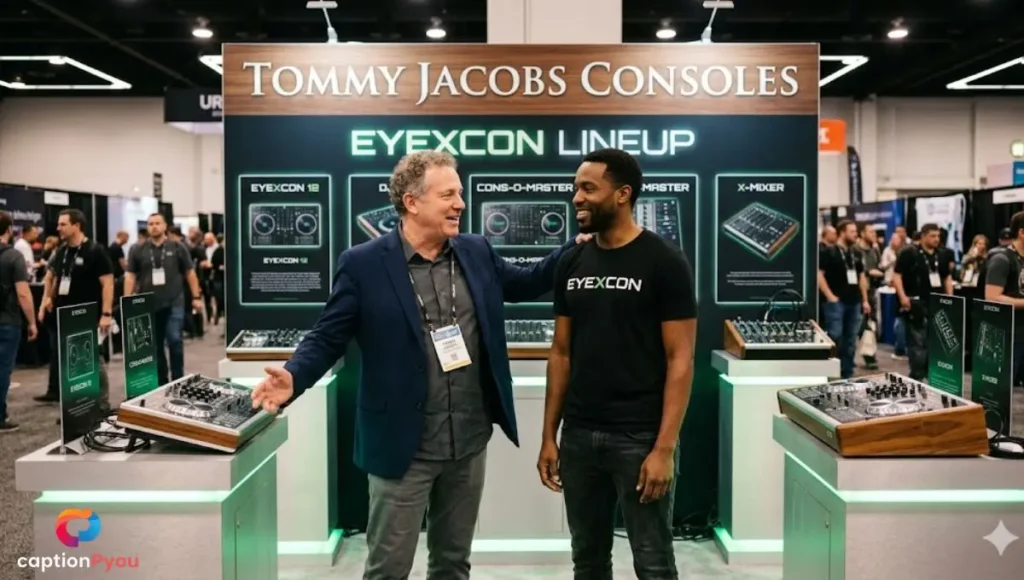
What a believable 2026 lineup would look like is something like this:
| Model concept | Likely user | Key value |
| EyeXcon Core | Mainstream gamers | Basic gaze navigation and immersion |
| EyeXcon Pro | Esports and power users | Lower-latency tracking and profile tuning |
| EyeXcon Creator | Streamers | Gaze overlays, audience engagement, scene control |
| EyeXcon Access | Accessibility users | Enhanced hands-free controls and UI assistance |
That hypothetical lineup mirrors the real market split already seen between dedicated hardware like Tobii and software-led options like Beam. Tobii emphasizes integrated head and eye tracking with wide game support, while Eyeware Beam offers lower-cost access via webcam or phone.
EyeXcon for Esports & Competitive Gaming
This is where search intent gets sharper. Players are not just asking what EyeXcon is. They want to know whether it can improve gaming accuracy, reduce input lag with eye tracking, and deliver a real edge in competition.
The performance answer is nuanced. Eye tracking does not magically create better aim. But it can improve visual workflow. In competitive environments, milliseconds are not only about click speed. They are also about where attention lands, how fast information is read, and how cleanly the brain transitions from spotting to acting. Studies and industry materials both point toward eye tracking as useful for visual-behavior analysis and training.
In practice, the benefits of eye tracking in esports can include:
- faster target acquisition awareness
- Better minimap and HUD scanning
- cleaner replay analysis
- stronger coaching data
- less camera-control friction in sim and tactical titles
For a Valorant-style or CS-style player, it may be best as a training and awareness tool. For sim racers or flight-sim competitors, it can feel much more directly game-changing.
Streamers and Content Creators: A Visual Playground
One of the most practical uses of eye tracking in 2026 is content creation. Tobii promotes creator use cases through gaze overlays, and Eyeware Beam similarly highlights eye-tracking overlays for live streams and recordings.
That makes EyeXcon especially appealing for streamers because viewers love context. When fans can literally see what the creator is focusing on, content becomes more educational and more entertaining.
Examples:
- In an FPS stream, viewers can see whether you tracked the doorway or the minimap first.
- In an RPG, they can watch your attention jump between loot, dialogue, and enemy movement.
- In horror games, gaze overlays amplify suspense because the audience sees your panic in real time.
This is not a gimmick. It is a storytelling layer.
Community-Driven Engineering
Many EyeXcon articles frame the project as community-first. That is believable because the current eye-tracking space evolves fastest when devs, sim players, modders, and streamers all push compatibility together. OpenTrack support is a great example of the ecosystem effect: it expands how tracking products work across more games and genres.
A strong community-driven engineering model would prioritize:
- fast user feedback loops
- open compatibility bridges
- creator partnerships
- esports testing
- accessibility input
- game profile sharing
That approach often matters more than flashy ads. In gaming, communities discover the rough edges fast.
Aesthetic Meets Intelligence
The best 2026 gaming devices have stopped choosing between design and function. They do both. EyeXcon’s appeal, based on how people search for it, seems tied to a premium “smart but stylish” identity. Think minimal sensors, clean monitor mounting, software that does not look like a developer prototype, and lighting that feels intentional rather than loud.
That matters because eye tracking sits right in your visual field. If the device feels ugly or intrusive, it breaks immersion. If it disappears into the setup, it becomes part of the room’s flow.
Accessibility Reimagined
This may be the strongest case for EyeXcon as a category. Eye tracking is not only for elite players or flashy setups. It can dramatically improve access.
A good eye-tracking setup for PC gaming can support:
- reduced dependence on fine motor input
- easier menu navigation
- gaze-based control assistance
- more comfortable long sessions
- a more authentic hands-free gaming experience
Research on adaptive gameplay and gaze-supported interaction also points to higher player satisfaction when eye tracking is implemented well, though calibration quality remains critical.
If EyeXcon truly wants to lead, accessibility should not be a side feature. It should be central.
EyeXcon Ecosystem: What’s Included?
Because there is no clearly verified public official bundle page, the “ecosystem” is best understood as the features users would expect from any serious eyexcon gaming device 2026. That likely means:
- Eye-tracking sensor or camera-based module
- Calibration software
- Per-game profiles
- Stream overlay tools
- Head tracking support
- Performance analytics
- Creator integrations
- Accessibility presets
Here is what buyers usually compare in this category:
| Feature | Traditional controller setup | Modern eye-tracking setup |
| Primary input | Buttons, sticks, mouse | Buttons plus gaze/head input |
| Camera awareness | Manual | Can be assisted by eye/head movement |
| UI interaction | Button-heavy | Faster contextual focus |
| Streaming value | Standard facecam only | Facecam plus gaze overlay |
| Accessibility | Limited without add-ons | Stronger adaptive potential |
| Setup complexity | Lower | Medium, depends on calibration |
Real Player Testimonials on EyeXcon
There are not enough verified first-party consumer reviews publicly available to present formal testimonial quotes for EyeXcon itself. That is important. I would not treat anonymous blog praise as trustworthy customer proof.
What is fair to say is that the broader eye-tracking category gets positive feedback around three recurring themes:
- stronger immersion in Sims and open-world play,
- more expressive streaming,
- reduced “looking with your hands” feeling when head/eye tracking is active. Tobii explicitly markets that natural-look benefit, and Beam markets similar immersive gains through webcam-based tracking.
So the honest takeaway is this: interest is real, but EyeXcon-specific testimonials remain sparse and lightly verified.
EyeXcon vs Other Eye Tracking Devices (2026 Comparison)
This is the section many users actually want.
| Device/platform | Type | Best for | Key strengths | Caveat |
| EyeXcon | Emerging/unclear public status | Curious early adopters | Strong concept appeal and brand intrigue | No clearly verified official retail documentation yet |
| Tobii Eye Tracker 5 | Dedicated hardware | Serious sim, creator, immersion users | Head + eye tracking, wide support, mature ecosystem | Higher cost |
| Beam Eye Tracker | Software/webcam-based | Budget-conscious PC users | Low entry cost, no extra hardware required | Depends on camera quality and setup |
Tobii is the most established gaming reference point here. It currently advertises broad game support and dedicated hardware built specifically for head and eye tracking. Beam is the value play, offering webcam-based tracking and compatibility through tools like OpenTrack.
So, if someone asks for the best eye tracking device for gamers right now, EyeXcon is not yet the safest answer. Tobii is the safer premium recommendation, while Beam is the safer budget recommendation. EyeXcon is the most intriguing wildcard.
EyeXcon Price, Availability & Where to Buy
At the time of writing, I could not verify a clear official EyeXcon store page or confirmed retail pricing from a primary source. Public search results are dominated by blog articles and social mentions rather than an identifiable manufacturer’s checkout page.
For context, the live market around eye tracking currently includes:
- Beam Eye Tracker at about $29.99 list, with a promotional sale price shown at $23.99 on its pricing page.
- Tobii Eye Tracker 5 is sold through Tobii and resellers, though publicly surfaced prices vary by region and seller.
That means EyeXcon is currently in a “watch this space” category. If you are shopping today, buy from established sellers with documented compatibility and support.
Limited Edition Drops & Future Releases
EyeXcon-style coverage often hints at exclusivity, limited drops, and premium product identity. That strategy would fit the 2026 market well because scarcity helps niche gaming hardware build hype. But again, there is not enough primary-source confirmation to treat any limited release timeline as official.
If limited editions do happen, expect them to focus on:
- creator-branded finishes
- esports team collaborations
- RGB or stealth colorways
- premium software packs
- collector bundles with stream assets
Future Roadmap — What’s Coming in Late 2026
If the EyeXcon concept matures, late 2026 would likely be about ecosystem depth rather than basic proof of concept.
The roadmap users seem to want includes:
- lower-latency gaze response
- stronger calibration recovery
- Better console support
- deeper esports analytics
- more creator overlays
- adaptive profiles across genres
The bigger industry path points that way, too. Tobii continues to expand game support and platform integration, while Beam continues pushing accessible software-based tracking with reduced hardware barriers.
Pros & Cons
Pros
- exciting concept for next-gen immersive gaming hardware
- strong fit for streamers, sim players, and accessibility use
- aligns with real growth in eye-tracking gaming technology
- potentially valuable for esports training and visual analysis
- more natural than “look with the right stick” interaction
Cons
- No clearly verified official product documentation surfaced publicly
- EyeXcon-specific reviews and specs remain limited
- Game compatibility is everything, and unverified hardware is risky
- The setup quality depends heavily on calibration and software support
- Console compatibility is still uncertain from public evidence
Is Tommy Jacobs EyeXcon Worth It? Final Verdict
As a concept, Tommy Jacobs Gaming EyeXcon is compelling. It taps directly into where gaming is heading: more natural input, smarter visual interaction, better creator tools, and stronger accessibility. That is exactly why the keyword keeps gaining attention.
As a buying decision in March 2026, though, the answer is more cautious. Based on currently visible public evidence, EyeXcon looks more like an emerging brand story than a fully verified mainstream product line. If you want proven eye-tracking gaming technology right now, Tobii is the stronger premium pick, and Beam is the stronger budget-friendly pick.
FAQs About Tommy Jacobs Gaming EyeXcon
What is Tommy Jacobs Gaming EyeXcon?
It appears to be an emerging 2026 gaming concept centered on eye-led interaction, but public documentation is still mostly secondary rather than official.
Is EyeXcon a real gaming device in 2026?
There is online buzz around it, but I could not verify a clear official product page or retail launch source.
How does eye tracking work in gaming?
Sensors or cameras detect eye movement and estimate your gaze point, letting games react to where you look.
Does eye tracking improve gaming performance?
It can improve awareness, immersion, and training analysis, especially in sims, creators’ workflows, and some esports scenarios.
Is EyeXcon better than traditional controllers?
Not as a full replacement. The best use is as an added input layer that complements the mouse, keyboard, or controller.
What is the best eye-tracking device for gamers right now?
Based on currently verified public info, Tobii is the safer premium option, and Beam is the safer budget option.
What is the ideal eye tracking setup for PC gaming?
A solid webcam or dedicated tracker, proper monitor positioning, accurate calibration, and compatible games or OpenTrack support.
Is there EyeXcon compatibility with the console?
There is no clear, verified public documentation confirming broad console compatibility at this time.
Can eye tracking reduce input lag in gaming?
It can reduce interaction steps by turning gaze into input, but total latency still depends on hardware, software, and game support.
Why are gamers searching for EyeXcon so much in 2026?
It sits at the intersection of creator culture, esports curiosity, accessibility, and the growing demand for adaptive, immersive play.

Welcome to CaptionpYou! I’m William, your AI-powered SEO wordsmith turning humor, creativity, and captions into digital magic. I craft viral puns and catchy lines that make every post shine.